
Physical Activities
Physical activity has been found to improve sleep, involvement in daily activities, and physical function for Alzheimer's patients (Smallfield & Heckenlaible, 2017). Furthermore, research has found that social and physical activities (like games!) had a positive impact on cognitive function (Bae et al., 2020). These research articles, amongst several others, have demonstrated the importance of physical activity amongst the Alzheimer's and dementia population.
01


Air Hockey
Materials: You can make this yourself or buy a set! To buy a set of pushers and pucks for $11.99-$13.99 you can go on amazon and search, “INSCOOL Air Hockey Pushers and Air Hockey Pucks Air Hockey Paddles, Goal Handles Paddles Replacement Accessories for Game Tables(4 Pushers, 8Pucks”or use the link https://a.co/d/irySZ0W. To make it yourself you will need a table, jar lids (for pucks), borders for tables (books), and tissue boxes (for pushers).
Directions: Have the individual(s) sit in a stable chair on opposite sides of the table. Place books around the border of the table to prevent the puck from falling off the sides of the table. Have individuals pass the puck back and forth and try to get it past each other at the end of the table to receive a point.
Hints for success:
-
Visually demonstrate how to play
-
Play music in the background
-
Play with them
-
If they make up their own rules, just go with it (as long as they are safe of course)!!
Grade Up:
-
Increase the distance to the goals
-
Have them use their non-dominant hand
-
Have them add up their points as they go along
Grade Down:
-
Decrease the distance to the goals
-
Have them only use their dominant hand
-
Add the points for them
Activity Addresses:
-
Upper body range of motion
-
Visual-spatial perception
-
Reflexes
-
Direction following
-
Hand-eye coordination
-
Weight shifting
-
Grip strength
02
Bowling
Materials: Bowling pin set or tall cones and a ball
Directions: Have individuals sit in a stable chair or stand with feet shoulder width apart and toss a ball at 10 “pins”.
Hints for success:
-
Place a stable chair behind the person if they are standing, incase they lose their footing
-
Use a gait belt if they have poor balance
-
Play music in the background
-
Play with them
Grade Up:
-
Increase distance to the pins
-
Have them bend down and throw the ball between their legs
-
Have them catch the ball between rounds
-
Perform in standing
Grade Down:
-
Decrease distance to the pins
-
Have them throw the ball straight at the cones without bending over
-
Hand them the ball between rounds
-
Perform in sitting
Activity Addresses:
-
Endurance/activity tolerance
-
Upper body range of motion
-
Visual-spatial perception
-
Balance
-
Direction following
-
Hand-eye coordination


01
02
03

04
05
06
Links for Boxing Videos:
03
Boxing
Materials: Boxing gloves/retrieving gloves and bag (optional/alternate options: pillow, pool noodles, or nothing!)
Directions: Start in sitting and have individual learn combinations with you (see side image). Start with combo 1-2 and advance as you see fit. If an individual is unable to remember combos just have them mimic you or freestyle it. When comfortable, move to standing and/or advance the combinations by calling out different numbers. Based on cognitive abilities and temperament decide whether to do air punches or retrieval punches. You can use the pillow, pool noodle, or retrieving gloves to receive punches. An alternate option would be to watch and follow along to a boxing video linked to the left.
Hints for success:
-
Go with the flow! If he/she wants to just punch away randomly, let them (as long as both you and them are safe)!
-
Play music!
-
Provide visual demonstrations/cues!
Grade Up:
-
Perform combinations
-
Complete in standing or walking
-
Have them repeat combos outload
Grade Down:
-
Complete in sitting
-
Freestyle punching
-
Visual cues where to punch (waving hand)
Activity Addresses:
-
Balance
-
Endurance
-
Upper body strength
-
Upper body range of motion
-
Weight shifting
-
Reflexes
-
Cognition/Memory
04
Cornhole
Materials: Cornhole and Bean bags or make a homemade target (ring) with a bag or balls to throw!
Directions: Set up cornhole boards inside or outside at an appropriate distance away from the individual. Have individual toss bags onto board. Keep simple scoring to increase motivation or don't keep score at all!
Hints for success:
-
Play with your loved one to promote engagement
-
Adjust the distance to increase success early on
-
Visually demonstrate how to play
-
Play music as you play
Grade Up:
-
Complete in standing
-
Increase the distance from the boards
-
Increase the weight of beanbag/object being thrown
Grade Down:
-
Complete in sitting
-
Decrease the distance from the boards
-
Decrease weight of beanbag/object being thrown
-
Have the goal be to hit the board instead of making it into the hole
Activity Addresses:
-
Upper body range of motion
-
Balance
-
Spatial awareness
-
Direction following

05

Darts
Materials: Dart board (Velcro board found on amazon titled, “Dart Board Game Set-29 inches, Board Games with 16 Stick Balls” for $13.99).
Link: https://a.co/d/2IcmWAU
Directions: Have individual(s) sit in a stable chair or stand with feet shoulder width apart and toss the velcro balls at the target. Keep score to keep it competitive if you would like!
Hints for success:
-
Place a stable chair behind the person if they are standing, incase they lose their footing
-
Play music in the background
-
Play with them
-
Set them up for success early by decreasing the distance they have to throw until they are successful, then move them back to find the right challenge.
-
It may be helpful to provide them with a visual cue such as painter tape on the floor so they know where to stand
Grade Up:
-
Increase the distance to the board
-
Have them use their non-dominant hand
-
Have them add up their points
-
Have them pull off their balls from the velcro board
-
Perform in standing
-
Have them toss overhand
Grade Down:
-
Decrease them distance to the board
-
Have them only use their dominant hand
-
Add the points for them
-
Hand them the velcro balls between rounds
-
Perform in sitting
-
Have them toss underhand
Activity Addresses:
-
Endurance/activity tolerance
-
Upper body range of motion
-
Visual-spatial perception
-
Cognition
-
Balance
-
Direction Following
-
Hand-eye coordination
06
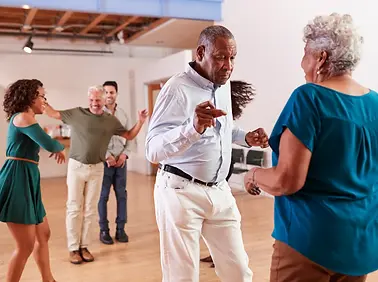
Dancing
Materials: Computer/TV, and chair
Directions: Utilize some of the links from YouTube to complete seated or standing dance classes. If the individual(s) demonstrates good balance and physical fitness, this activity can be done in standing. Video classes are not necessary, so feel free to turn on your favorite tunes and get to dancing!
Hints for success:
-
If needed, slow down the video
-
Increase the volume to allow the individual(s) to follow along
-
Provide visual and tactile/physical cues to help
-
Sit next to or in front of them and perform the moves with them
-
If they are unable to follow the video, turn it off and lead the moves yourself!
-
Play the music they love and dance the moves they enjoy!
Grade Up:
-
Complete in standing
-
Increase difficulty of dance moves
-
Increase length of videos
Grade Down:
-
Complete in sitting
-
Sit in front or next to individual to allow them to mirror
-
Turn off video and instruct yourself with decreased verbiage and increased visual direction
Activity Addresses:
-
Balance
-
Activity tolerance/endurance
-
Upper and lower body range of motion
-
Direction Follow
-
Mind-Body connection/Proprioception
07

Links:
https://youtu.be/9nDBY2tH3lI?si=TbVCvuW0QiE9_otN
https://youtu.be/8BcPHWGQO44?si=1dyLVBv7_qrKikUN
Exercise Video
Materials: Computer/TV, and chair (Optional: weights)
Directions: Utilize some of the links below from YouTube to complete exercise classes. They range from upper body/lower body workouts, Tai Chi, boxing, etc. This can be completed in sitting or standing depending on the level of the individual.
Hints for success:
-
If needed, slow down the video
-
Increase the volume to allow individual(s) to follow along
-
Provide visual and tactile/physical cues to help
-
Sit next to or in front of them and perform the exercises with them
-
If they are unable to follow the video, turn it off and lead them yourself!
Grade Up:
-
Complete in standing
-
Increase the difficulty of the videos
-
Increase the length of the videos
Grade Down:
-
Complete in sitting
-
Sit in front or next to individual to allow them to mirror
-
Turn off video and instruct yourself with decreased verbiage and increased visual direction
Activity Addresses:
-
Balance
-
Upper body and lower body strength
-
Activity tolerance/endurance
-
Upper body and lower body range of motion
-
Direction following
-
Mind-Body connection and proprioception
-
Weightshifting
08
Kick Bowling
Materials: Bowling pin set up or tall cones and a soft ball
Directions: Have individuals sit in a stable chair or stand with feet shoulder width apart and kick the ball and try to knock down the10 “pins”
Hints for success:
-
Place a stable chair behind the person if they are standing, incase they lose their footing
-
Use a gait belt if they have poor balance
-
Play music in the background
-
Play with them
Grade Up:
-
Increase the distance to the pins
-
Have them stop the ball with their feet between rounds or catch the ball
-
Perform in standing
Grade Down:
-
Decrease the distance to the pins
-
Place the ball between their legs for them between rounds
-
Perform in sitting
Activity Addresses:
-
Endurance/activity tolerance
-
Lower body range of motion
-
Visual-spatial perception
-
Balance
-
Weight shifting
-
Direction following

09

Ladder Ball
Materials: Ladder Ball and Bolo balls. You can find sets on amazon or at Five Below for $5.00.
Directions: Set up Ladder Ball inside or outside at an appropriate distance away from the individual. Use tape on the ground or a cone to show the individual(s) where they need to stand. Have individuals toss bolo balls onto ladder. Keep simple scoring to increase motivation!
Hints for success:
-
Visually demonstrate how to play
-
Play music in the background
-
Play with them
-
If they make up their own rules, just go with it (as long as they are safe of course)!!
-
Use less words and more actions to show how it's done!
Grade Up:
-
Increase the distance to the ladder
-
Have them use their non-dominant hand
-
Have them add up their points
-
Complete in standing
Grade Down:
-
Decrease distance to the ladder
-
Have them only use their dominant hand
-
Add their points for them
-
Complete in sitting (use a stable chair)
Activity Addresses:
-
Upper body range of motion
-
Visual-spatial perception
-
Balance
-
Cognition
-
Direction Following
-
Hand-eye coordination
10
Nerf Gun Targets
Materials: Nerf Guns, Nerf Bullets, and targets (balls, cups, figurines, ect.)
Directions: Set up targets and label them with differing point values based on the distance they are from the individual(s). Have individual(s) shoot at the targets and try to knock them down or hit the target in order to gain points. If competing they can try to knock down the most number of targets or one person can go at a time and count points.
Hints for success:
-
Visually demonstrate how to play
-
Play music in the background
-
Play with them
-
If they make up their own rules, just go with it (as long as they are safe of course)!!
-
Use less words and more actions to show how it's done!
Grade Up:
-
Have them use their non-dominant hand
-
Have the targets further away
-
Make the targets smaller
-
Make moving targets
-
Complete in standing
Grade Down:
-
Have them only use their dominant hand
-
Have the targets closer to individual(s)
-
Make the targets bigger
-
Complete in sitting
Activity Addresses:
-
Visual-spatial perception
-
Reflexes
-
Visual scanning
-
Hand-eye coordination
-
Grip strength
-
Pinch strength

11

Noodle Balloon Tap
Materials: Stable chairs, balloon, and pool noodles.
Directions: Set up individuals in a circle and have them hold pool noodles in their hand. Toss a balloon into the circle and have individual(s) hit the balloon with their noodles. Keep people close enough that the balloon won't escape too easily, but far enough where they will not hit one another when using their noodle. To make it more cognitively enriching, play the alphabet game; pick a category and every time someone hits the balloon they go down the alphabet and say something that starts with that letter within that specific category. Ex. Category: Fruit, 1st Hit: Apple, 2nd Hit: Banana, 3rd Hit: Clementine….etc.
Hints for success:
-
Visually demonstrate how to play
-
Play music in the background
-
Play with them
-
If they make up their own rules, just go with it (as long as they are safe of course)!!
-
Use less words and more actions to show how it's done!
Grade Up:
-
Pick harder categories for them to use
-
Have them use their non-dominant hand
-
Use multiple balloons
Grade Down:
-
Pick easier categories for them to use
-
Have them only use their dominant hand
Activity Addresses:
-
Upper body range of motion
-
Visual-spatial perception
-
Reflexes
-
Cognition
-
Direction following
-
Visual tracking
-
Hand-eye coordination
-
Weight shifting
-
Activity tolerance/endurance
12
Noodle Ball-Points/Baseball
Materials: Pool noodle, beach ball, and painters tape
Directions: Set up home base with a line of painters tape to designate the hitting spot. Take steps up and create a ladder-like pattern with the painters tape on the floor designating points by 1. The further an individual hits the beach ball with the noodle the more points they get. The lines designate the number of points they receive based on the distance they hit. If you want to make it more familiar, set up painters tape in a baseball field pattern and count points based on the “base” they hit it to!
Hints for success:
-
Visually demonstrate how to play
-
Play music in the background
-
Play with them
-
If they make up their own rules, just go with it (as long as they are safe of course)!!
-
Use less words and more actions to show how it's done!
Grade Up:
-
Have them use their non-dominant hand
-
Have them add up their points
-
Complete in standing
Grade Down:
-
Have them only use their dominant hand
-
Have them use both hands to hold the noodle horizontally and hit the ball
-
Add their points for them
-
Complete in sitting (stable chair)
Activity Addresses:
-
Upper body range of motion
-
Reflexes
-
Balance
-
Cognition
-
Hand-eye coordination

13
Put-put

Materials: Golf putter, plastic cups, tape, and golf balls (Optional: putting green, putting holes)
Directions: Utilize cups/carboard holes/putting holes throughout the space to set up a put-put course or a single hole. Use the golf balls to get it into the hole. If doing a course for the final round, if you have it, utilize the actual putting green. Try to set up a 6 to 9 hole course. Materials can be found on amazon (links are to the left beneath the first photo)!
Hints for success:
-
Demonstrate how to complete the task
-
Play along for more fun!
-
Listen to music in the background
-
Set them up for success early by decreasing distance from the hole
-
If they make up their own rules, just go with it!
-
Keep score (adjust on the fly if needed) to keep it competitive!
Grade Up:
-
Complete in standing
-
Increase the length of the put
-
Increase the complexity or length of the course
-
Make it a competition
Grade Down:
-
Complete in sitting
-
Hand over hand assist to complete the put
Activity Addresses:
-
Balance
-
Upper body range of motion
-
Direction following
-
Visual-spatial perception
-
weight shifting
-
Activity tolerance/endurance
14
Ring Toss
Materials: Tall cones for the targets and rings
Directions: Have the individual(s) utilize rings to toss onto cones. Label cones with different point values based on their distance from the individual(s). Keep score to make it competitive.
Hints for success:
-
Play along for more fun!
-
Listen to music in the background
-
Set them up for success early by decreasing distance to cones
Grade Up:
-
Increase number of cones/targets
-
Increase the distance to the targets
-
Use smaller rings
-
Complete in standing
-
Have them keep score
Grade Down:
-
Decrease the number of cones/targets
-
Decrease the distance to the targets
-
Use larger rings
-
Complete in sitting
-
Keep score for them
Activity Addresses:
-
Upper body range of motion
-
Balance
-
Weight shifting
-
Visual-spatial perception
-
Cognition

15

Scavenger Hunt
Materials: None! (Optional: Cones)
Directions: Option One: give individual(s) a theme such as “the color orange”, “birds”, or “cars” and let them walk around the facility or the outdoor area (with supervision) to find those items. Keep count of the items they find as they call them out. Periodically remind them of the item they are finding. Option Two: Hide cones throughout the building or outside and have the individual(s) go and find them.
Hints for success:
-
Play along for more fun!
-
Listen to music in the background
-
Set them up for success early by decreasing difficulty of finding cones or objects early on
-
Utilize the same color cones if possible
Grade Up:
-
Increase the number of cones/objects to find
-
Hide cones in more difficult places
-
Use smaller objects like coins instead of cones
-
Increase distance between objects
Grade Down:
-
Provide verbal/tactile cues
-
Decrease the difficulty of finding objects
-
Decrease the distance between objects
Activity Addresses:
-
Endurance
-
Visual-spatial perception
-
Visual scanning
-
Cognition-Memory
-
Direction Following
16
ShuffleBoard
Materials: You can make this yourself! Use a Swiffer mop as the paddle, jar lids (or the air hockey lids from above) as the pucks, and painters tape to create the shuffleboard court.
Directions: Use the painters tape to create the court on the floor. After the tape is set up grab the swifter and pucks. Use the paddle to push pucks onto the court and receive points. Keep score of points to keep it fun and competitive!
Hints for success:
-
Visually demonstrate how to play
-
Play music in the background
-
Play with them
-
If they make up their own rules, just go with it (as long as they are safe of course)!!
Grade Up:
-
Increase the distance of the court
-
Have them use their non-dominant hand
-
Have them add up their own points
Grade Down:
-
Decrease the distance of the court
-
Have them only use their dominant hand
-
Add the points for them
Activity Addresses:
-
Upper body range of motion
-
Visual-spatial perception
-
Balance
-
Weight shifting
-
Cognition
-
Direction Following


17

Soccer Pass/Goal
Materials: Soccer ball or a ball they can kick, and cones
Directions: Have individuals stand with feet shoulder width apart and pass the soccer ball to another person or between goals that are set up with cones. If you are alone and a person demonstrates poor balance use the cones as the target and assist the individual by holding their waist/gait belt. If you have more than one person running the activity, then one person can pass the ball back and forth with the individual(s) while the other holds the waist/gait belt of the individual(s). When setting up cones place three “goals” worth a different number of points to keep it competitive.
Hints for success:
-
Place a stable chair behind the person if they have poor balance, incase they lose their footing
-
Use a gait belt if they have poor balance
-
Hold the ball steady for them prior to their kick
-
Play music in the background
-
Before kicking the ball have them do preparatory kicks to mimic the action they will perform
Grade Up:
-
Increase number of goals
-
Decrease distance between the cones to make it harder to achieve a goal
-
Have the individual stop the ball with their feet when you pass it to them
-
Increase the distance to the goals or to the passer
Grade Down:
-
Decrease the number of goals
-
Increase the distance between cones to make it easier to achieve a goal
-
Stop the ball yourself before they kick the ball
-
Hold the ball steady for them prior to the kick
-
Decrease the distance to the goals or to the passer
Activity Addresses:
-
Endurance
-
Visual-spatial perception
-
Balance
-
Direction Following
-
Lower body range of motion
-
Weight shifting
18
Table Golf
Materials: Soft plastic mini balls, construction paper, table
Directions: Utilize two tables and push them close enough together that there is a medium sized gap between them. Tape construction paper with a hole or holes in the paper. Have the individual(s) sit at the end of the table (or sides if there are more people) and try to roll the balls into the hole(s). Construction paper can be swapped out each round to change the size and location of the hole.
Hints for success:
-
Demonstrate how to complete the task
-
Play along for more fun!
-
Listen to music in the background
-
Set them up for success early by increasing size of the hole in the beginning
-
If they make up their own rules, just go with it!
Grade Up:
-
Complete in standing
-
Increase the length of the roll
-
Decrease the size of the hole
-
Add obstacles on the table during the roll
Grade Down:
-
Complete in sitting
-
Decrease the length of the roll
-
Increase the size of the hole
Activity Addresses:
-
Balance
-
Activity tolerance/endurance
-
Visual-spatial perception
-
Direction Following
-
Upper body range of motion

19

Volleyball
Materials: Stable chairs, balloons or beach ball, and net or string (Optional pool noodle)
Directions: Set up chairs on opposite sides of the net (or string) and have individual(s) tap the ball over the net back and forth. If the ball drops on one side of the net the other team receives the point, just like in volleyball! If you would like, the individual(s) can use pool noodles to hit the ball over the net.
Hints for success:
-
Demonstrate how to complete the task
-
Play along for more fun!
-
Listen to music in the background
-
Set them up for success early by decreasing distance to the net
-
Make sure the chairs are stable
-
If they make up their own rules, just go with it!
Grade Up:
-
Complete in standing
-
Increase the number of balls/balloons used
-
Increase the distance from the net
-
Increase the height of the net
Grade Down:
-
Complete in sitting
-
Decrease the distance from the net
-
Decrease the height of the net
Activity Addresses:
-
Sitting Balance
-
Sitting tolerance
-
Upper body range of motion
-
Visual-spatial perception
-
Visual scanning
-
Reflexes
-
Weight shifting
-
Hand-eye coordination
20
Horseshoes
Materials: Horseshoes Set (https://a.co/d/io6KxOJ)
Directions: Set up horseshoe pegs and play a game of horseshoes either inside or outside. Toss the horseshoe on the pegs and get points!
Hints for success:
-
Demonstrate how to complete the task
-
Play along for more fun!
-
Listen to music in the background
-
Set them up for success early by decreasing distance to the pegs
-
If sitting make sure chairs are stable
-
If they make up their own rules, just go with it!
Grade Up:
-
Complete in standing
-
Increase the number of throws
-
Increase the distance to the pegs
-
Toss with their non-dominant hand
Grade Down:
-
Complete in sitting
-
Decrease the distance to the pegs
Activity Addresses:
-
Sitting/Standing Balance
-
Activity tolerance/endurance
-
Upper body range of motion
-
Visual-spatial perception
-
Hand-eye coordination

21

Archery
Materials: Toy bows, toy arrows, and a target
Directions: Set up individual(s) standing behind a line or sitting in a stable chair and have them shoot at a target or multiple targets. Targets can be the typical archery target or cups with points written on them can be utilized.
Hints for success:
-
Demonstrate how to complete the task
-
Play along for more fun!
-
Listen to music in the background
-
Set them up for success early by decreasing distance to the target
-
If sitting make sure chairs are stable
Grade Up:
-
Complete in standing
-
Increase the number of shots
-
Increase the distance to the targets
-
Increase the number of targets located in different areas
-
Have them use their non-dominant hand
Grade Down:
-
Complete in sitting
-
Decrease the distance to the target
-
Increase the size of the target
Activity Addresses:
-
Sitting/Standing Tolerance
-
Balance
-
Upper body range of motion
-
Visual-spatial perception
-
Hand-eye coordination
22
Tic Tac Toe Toss
Materials: Tic Tac Toe Toss game (https://a.co/d/gqjJKmK or https://a.co/d/8YMyNP5)
Directions: Have individual(s) standing behind a line or sitting in a stable chair and have them toss the bean bag at the tic tac toe board that will be set up across from them. Play a game of tic tac toe by trying to get three X’s or three O’s in a row with the bean bags.
Hints for success:
-
Demonstrate how to complete the task
-
Play along for more fun!
-
Listen to music in the background
-
Set them up for success early by decreasing distance to the board
-
If sitting make sure chairs are stable
-
If they play the game incorrectly, it’s okay!
Grade Up:
-
Complete in standing
-
Increase the number of rounds
-
Increase the distance to the board
-
Have them use their non-dominant hand
Grade Down:
-
Complete in sitting
-
Decrease the distance to the board
-
Tell them where to toss it
Activity Addresses:
-
Sitting/Standing Tolerance
-
Cognition
-
Balance
-
Upper body range of motion
-
Visual-spatial perception
-
Visual scanning
-
Weight shifting

23

Croquet
Materials: Croquet Set ( https://a.co/d/1iMWJSQ )
Directions: Have individual(s) standing behind a line or sitting in a stable chair. Have them use the mallets to hit the croquet ball into the wickets. They can try to hit just one wicket or you may set up a course if you would like.
Hints for success:
-
Demonstrate how to complete the task
-
Play along for more fun!
-
Listen to music in the background
-
Set them up for success early by decreasing distance to the wickets
-
If sitting make sure chairs are stable
-
If they play the game incorrectly, it’s okay!
Grade Up:
-
Complete in standing
-
Increase the number of rounds/wickets to utilize
-
Increase the distance to the wickets
Grade Down:
-
Complete in sitting
-
Decrease the distance to the wickets
-
Decrease the number of rounds
Activity Addresses:
-
Sitting/Standing Tolerance
-
Balance
-
Upper body range of motion
-
Visual-spatial perception
-
Weight shifting
24
Disk Golf
Materials: Disk Golf Set (frisbee and target cage)
Directions: Have individual(s) standing behind a line or sitting in a stable chair and have them toss the frisbee into the target. You can split people into teams to see who gets their frisbees into the target first or have them complete the task one at a time.
Hints for success:
-
Demonstrate how to complete the task
-
Play along for more fun!
-
Listen to music in the background
-
Set them up for success early by decreasing distance to the target
-
If sitting make sure chairs are stable
Grade Up:
-
Complete in standing
-
Increase the number of rounds
-
Increase the distance to the target
-
Have them use their non-dominant hand
Grade Down:
-
Complete in sitting
-
Decrease the distance to the target
Activity Addresses:
-
Sitting/Standing Tolerance
-
Balance
-
Upper body range of motion
-
Visual-spatial perception
-
Weight shifting
